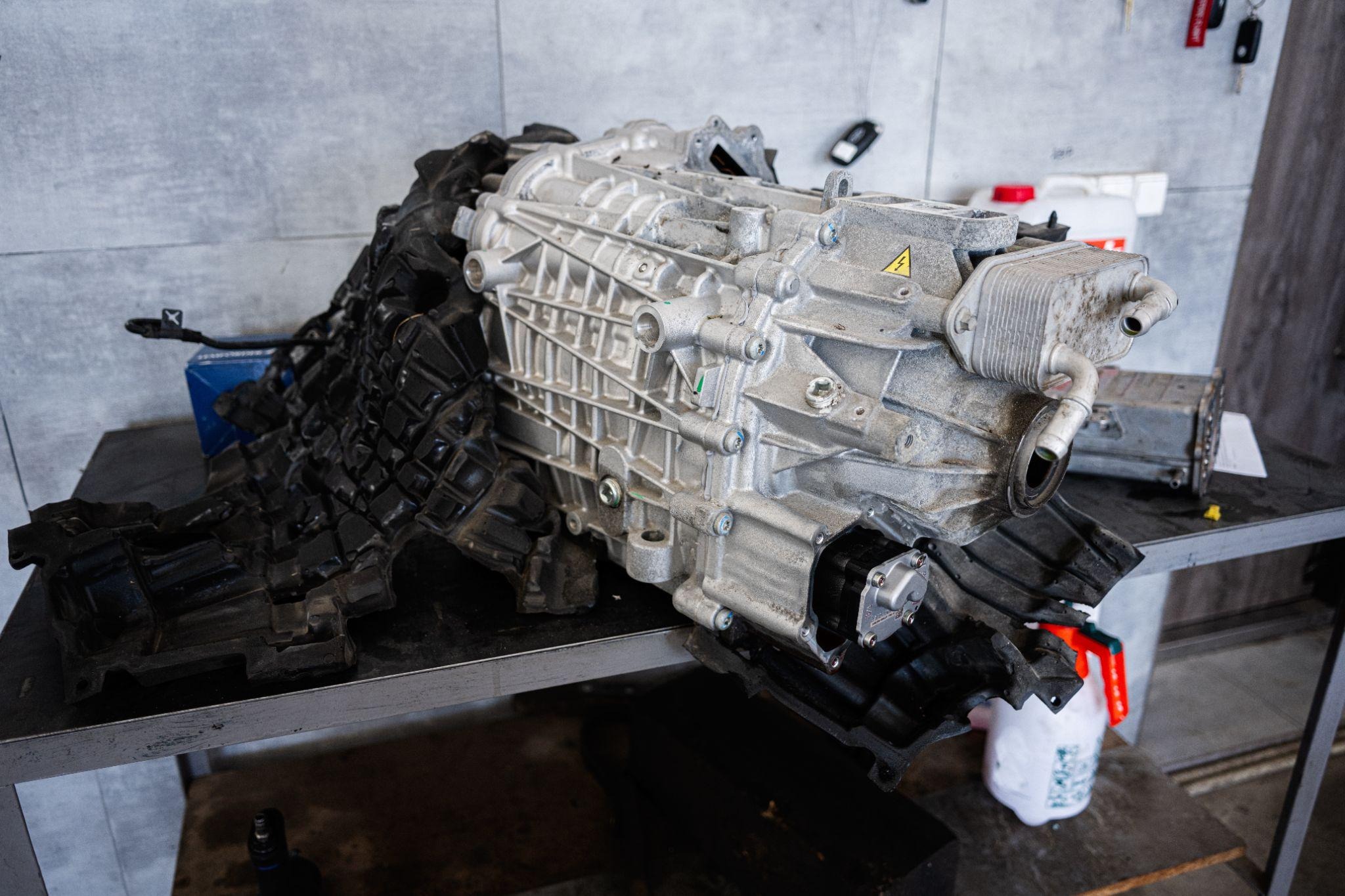
Subaru’s symmetrical all-wheel-drive system is the engineering centerpiece of every vehicle they produce. The brand has built its identity around AWD capability since the Leone in the 1970s, and the mechanical layout (longitudinally mounted boxer engine driving a center differential integrated into the transmission case) remains fundamentally unchanged across the current lineup. The problem is that this integrated design means transmission failures are more complex and more expensive to address than in a conventional FWD or RWD vehicle.
Aggregated repair data from independent Subaru specialists and transmission shops reveals failure patterns that vary significantly by model, generation, and drivetrain configuration. Understanding these patterns informs the replacement decision in ways that a generic repair quote does not.
The 4EAT: reliable but aging out
Subaru’s four-speed automatic, the 4EAT (also designated TZ1 in some markets), served the Legacy, Outback, Forester, and Impreza from the late 1980s through 2009. For a transmission designed in the 1980s, the 4EAT has an impressive durability record. Failure rates below 100,000 miles are low, typically under 3% based on data from shops that specialize in Subaru repair.
Above 150,000 miles, the pattern changes. The torque converter lockup clutch wears, producing a shudder between 30 and 45 mph that mirrors the symptom profile of the Honda/Acura failure discussed in transmission forums. The valve body develops scoring on the pressure regulator bore, causing erratic shift timing. And the front differential, integrated into the transmission case, accumulates wear on the ring and pinion teeth that produces a whine under deceleration.
Rebuilding a 4EAT is feasible but requires a specialist. The AWD center differential and viscous coupling add complexity that a general transmission shop may not have experience with. Pricing for a quality rebuild runs $3,200 to $4,800 depending on the extent of differential wear. A JDM replacement from a supplier stocking Subaru JDM transmissions typically costs $900 to $1,600 with verified mileage, and the swap can be completed in a day by a shop familiar with the platform.
The 5EAT: better in theory, complicated in practice
Subaru’s five-speed automatic, the 5EAT (TG5 designation), replaced the 4EAT in the Legacy, Outback, and Tribeca from 2005 onward. The additional gear improved highway fuel economy and reduced engine RPM at cruising speed. Jatco manufactured the base unit, and Subaru integrated their AWD system into the case.
The 5EAT introduced electronic torque converter lockup control, which is more precise than the 4EAT’s hydraulic system but adds electronic components that can fail independently. Solenoid pack failures produce harsh shifting and stored diagnostic codes (P0700, P0760, P0765 are common). The solenoids themselves are replaceable without a full transmission removal on some configurations, but accessing them requires dropping the exhaust and, on turbocharged models, removing the downpipe.
Temperature sensitivity is higher on the 5EAT than the 4EAT. The tighter clutch pack spacing and thinner friction materials generate more heat per shift event. Subaru specified a transmission fluid change interval of 30,000 miles for “severe service” conditions, but many owners follow the “normal” interval of 60,000 miles or longer. In hot-climate states, every Subaru is operating under severe service conditions whether the owner acknowledges it or not.
Manual transmissions: the WRX and STI factor
Subaru’s manual transmissions have their own failure hierarchy. The five-speed in the WRX (TY755/TY754) is the weakest link in the drivetrain, with synchro failures on second and third gear being the most reported issue. Enthusiast driving and aftermarket power modifications (Cobb AccessPort tunes, larger turbo upgrades) push these transmissions past their torque capacity quickly.
The STI’s six-speed (TY856) is substantially stronger. DCCD (Driver Controlled Center Differential) models add electronic center differential management that allows the driver to bias torque front or rear. Failures on stock-power STIs are uncommon below 80,000 miles, but modified cars producing over 350 wheel horsepower regularly break third gear or the center differential gears.
JDM manual transmissions for WRX and STI applications are among the most sought-after units in the import market. Japanese Spec-C and S204 limited editions used transmissions with different gear ratios and, in some cases, stronger synchros than their USDM counterparts. Cross-referencing the transmission code against the specific JDM model it came from is critical for these applications. A TY856 from a Japanese STI Spec-C is not identical to a TY856 from a USDM STI, and the differences affect gear ratios and differential behavior.
CVT: the current generation’s challenge
Subaru’s Lineartronic CVT, used in the Impreza, Crosstrek, Forester, Legacy, and Outback from 2010 onward, represents a different durability profile entirely. The chain-driven CVT (as opposed to the belt-driven units used by Nissan and Toyota) has proven more durable than its competitors, but failures do occur. Subaru extended the CVT warranty to 10 years/100,000 miles on certain model years after acknowledging higher-than-expected failure rates. A class-action settlement in 2020 covered 2012-2017 models, which tells you the scale of the issue.
Shuddering during low-speed acceleration is the primary symptom. The valve body recalibration (a software update combined with a fluid change) resolves the issue in roughly 60% of cases. The remaining 40% require valve body replacement or full unit replacement. A new CVT from Subaru costs $7,000 to $8,500 installed. A JDM Lineartronic with verified mileage under 50,000 miles costs $1,500 to $2,200, and the chain-type design from the Japanese market uses the same specifications as the USDM version.
One detail that catches shops off guard: the CVT fluid in Subaru’s Lineartronic is not interchangeable with Nissan’s NS-2 or NS-3 CVT fluid, despite both being continuously variable transmissions. Subaru specifies their proprietary CVT fluid, and using the wrong specification will cause the steel chain to slip on the pulley cones, accelerating wear and voiding any remaining warranty. Any JDM CVT replacement should be filled exclusively with Subaru CVT fluid during installation, regardless of what fluid the unit contained when it arrived from Japan.
Subaru’s AWD system creates both the appeal and the complexity. Every transmission replacement must account for the integrated center differential, the viscous coupling or electronically controlled differential (depending on the model), and the front differential gearing. Mismatching tire diameters by more than 2/32″ of tread depth difference across the four tires will damage the center differential in any Subaru AWD transmission, new or used. That detail matters more than most owners realize, and it applies equally to a fresh JDM unit as it does to the original transmission. The owners who understand the system and maintain it accordingly get 200,000 miles or more out of their drivetrains. The ones who ignore tire matching and fluid intervals get repair bills that make the vehicle look disposable.