The traditional agricultural playbook—even when augmented by high-throughput phenotyping and speed breeding—is ultimately constrained by the existing natural gene pool. If a crop species completely lacks the genetic machinery to survive extreme salinity, endure prolonged temperatures above 45°C, or fix its own nitrogen, traditional crossing cannot generate those traits from thin air.
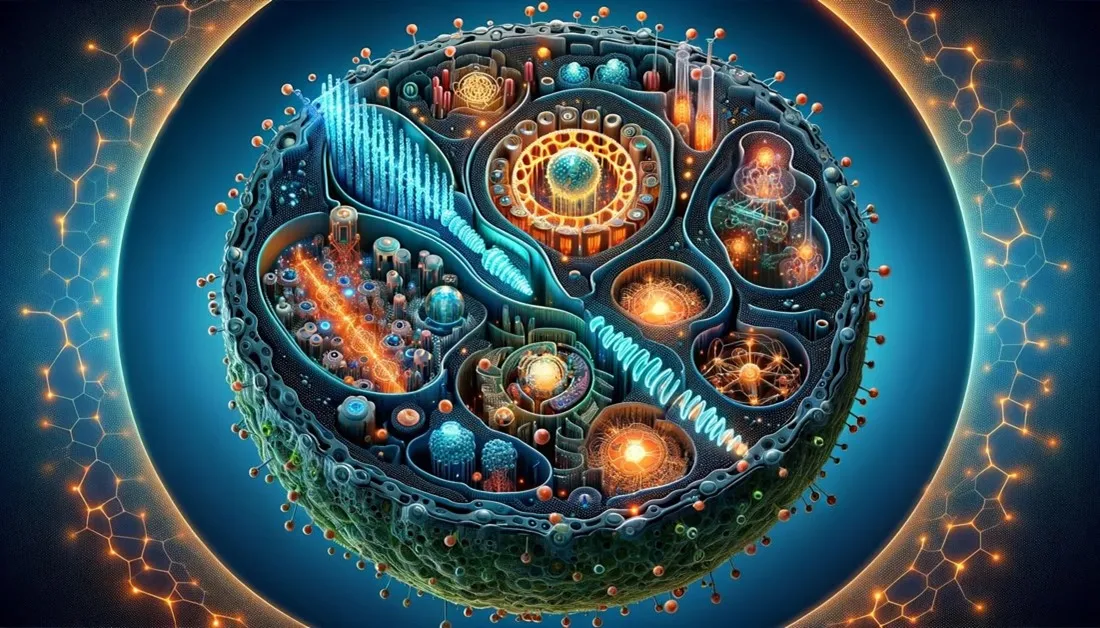
To meet the compounding demands of a rapidly changing climate and a global population heading toward 10 billion, agriculture is merging with Synthetic Biology (SynBio) and Generative AI. Rather than merely selecting for existing traits, scientists are utilizing generative large biology models (LBMs) to design completely novel proteins, metabolic pathways, and gene networks from scratch. This fusion of artificial intelligence and bioengineering allows us to rewrite crop genetics, engineering highly resilient, self-fertilizing crops designed to thrive on a warming planet.
1. Generative Large Biology Models for de Novo Protein Design
For decades, genetic engineering focused on a “cut-and-paste” approach: taking a known gene from one organism (like a bacteria) and inserting it into a crop to express a specific trait (such as insect resistance). While effective, this method limits scientists to proteins that already exist in nature.
Generative AI has broken this bottleneck through de Novo Protein Design. Advanced machine learning architectures—modeled on transformer networks and diffusion processes similar to those used in language and image generation—are trained on vast global databases of known protein sequences and their 3D structures. Instead of processing words, these Large Biology Models (LBMs) treat amino acids as letters and functional proteins as complete essays.
[Target Trait Requirement] ──► [Generative Diffusion Model] ──► [3D Structure Prediction] ──► [CRISPR Gene Synthesis]
When engineers require a plant enzyme that can maintain its structural integrity and drive photosynthesis at extreme temperatures, they input these target parameters into the generative model. The AI handles the molecular design:
- Structure Generation: The model designs a completely novel 3D amino acid backbone optimized for thermal stability, bypassing millions of years of slow natural evolution.
- Sequence Inversion: The model translates this ideal 3D shape back into a specific digital DNA sequence.
This custom sequence is then synthetically manufactured in a lab and integrated into the plant’s genome using CRISPR-Cas9 gene editing, instantly giving the crop structural heat resilience.
2. Engineering Self-Fertilizing Crops via Synthetic Nitrogen-Fixing Pathways
One of the most energy-intensive and environmentally damaging aspects of modern industrial agriculture is our heavy reliance on synthetic nitrogen fertilizers. Manufactured via the fossil-fuel-intensive Haber-Bosch process, these fertilizers consume roughly 2% of global energy and release massive amounts of greenhouse gases into the atmosphere.
While legumes (like soybeans and peas) naturally partner with specialized soil bacteria to convert atmospheric nitrogen into usable plant food, major cereal crops (such as wheat, corn, and rice) cannot do this. They must absorb nitrogen directly from the soil, requiring heavy chemical applications.
[Generative AI: Pathway Design] ──► [Synthesized nif Gene Cluster] ──► [Mitochondrial Integration] ──► [Self-Fixing Cereal Crop]
Synthetic biologists are using generative AI to design functional nitrogen-fixing (nif) gene clusters capable of operating directly inside cereal plant cells.
| Bioengineering Milestone | Computational Challenge | AI-Driven Solution | Agricultural Impact |
| Oxygen-Independent Enzyme Function | Nitrogenase enzymes are naturally destroyed by the oxygen produced during plant photosynthesis. | Generative structural modeling redesigns the enzyme’s outer shell, creating a molecular shield that keeps oxygen out while letting nitrogen in. | Allows the enzyme to operate safely inside active plant tissue without stalling photosynthesis. |
| Multi-Gene Complex Integration | Nitrogen fixation requires the coordinated expression of over a dozen distinct genes simultaneously. | Deep reinforcement learning models simulate thousands of gene regulatory networks to discover the exact promotional sequences needed to balance expression. | Ensures the plant produces the correct ratio of helper proteins, preventing toxic cellular imbalances. |
By embedding these custom, AI-optimized gene networks directly into the mitochondria or chloroplasts of cereal crops, scientists are working toward self-fertilizing plants. This breakthrough could eliminate the need for synthetic nitrogen fertilizers, drastically lowering farm operating costs while stopping chemical runoff into global water systems.
3. Optimizing Carbon Capture via Synthetic C4 Photorespiration Bypasses
Photosynthesis is the foundational engine of global agriculture, yet it is surprisingly inefficient. In major crop varieties like rice and wheat—which utilize the traditional C3 photosynthetic pathway—a critical enzyme named Rubisco frequently mistakes oxygen molecules for carbon dioxide.
When Rubisco binds with oxygen, it creates a toxic byproduct that the plant must actively break down through a process called photorespiration. This metabolic cleanup loop wastes up to 30% of the energy the plant captures from sunlight, severely limiting potential crop yields.
Synthetic biologists are fixing this evolutionary flaw by using generative models to design highly efficient, artificial metabolic bypasses. The AI maps out alternative biochemical pathways that rapidly break down the toxic photorespiration byproducts right inside the chloroplast, releasing the trapped carbon dioxide back to Rubisco for immediate use.
Crops engineered with these synthetic bypasses show a 20% to 40% increase in biomass production while using identical amounts of sunlight and water. This modification directly boosts crop yields while enabling fields to capture and store significantly higher volumes of atmospheric carbon within their root structures, turning commercial farmlands into powerful tools for global carbon sequestration.
4. Technical Bottlenecks: Off-Target Expressions and Metabolic Drifts
Despite the incredible potential of combining generative AI with synthetic biology, moving these custom crop designs from sterile laboratory environments to open commercial fields introduces severe technical and biological challenges.
The primary obstacle is metabolic drift and genetic instability. A synthetic gene network that operates perfectly inside a controlled lab environment can behave unpredictably when the crop faces real-world stresses like droughts, pest pressures, or fluctuating soil chemistry.
Because a plant’s internal systems are deeply interconnected, forcing it to express entirely new, human-designed metabolic pathways can inadvertently cause off-target effects. For example, a synthetic gene meant to improve drought tolerance might accidentally block the plant’s natural defense mechanisms against common soil fungi, leaving the crop vulnerable to diseases.
To manage this risk, computational biologists are building advanced, whole-plant multi-scale digital twins. These models allow researchers to simulate how synthetic genes interact across every layer of plant biology—from individual molecular pathways up to the entire physical crop structure—ensuring new designs remain stable, safe, and highly productive before they ever leave the lab.
5. The Long-Term Vision: Designing a Climate-Insulated Food Grid
The integration of synthetic biology and generative AI marks a fundamental shift in our relationship with agricultural science, moving mankind from simply cultivating nature to actively designing climate resilience.
Unlocking Complete Climate Independence
Instead of watching crop yields drop due to accelerating climate volatility, this technology allows scientists to proactively engineer crops tailored for future environments. We can design food crops that can grow in highly saline soils, withstand long-term heatwaves, and defend themselves against emerging pests, establishing a reliable, climate-insulated food supply.
A New Era of Sustainable Global Abundance
By engineering crops that capture carbon more efficiently, fix their own nitrogen, and maximize every drop of available water, synthetic biology provides a path toward sustainable agricultural abundance.
This technological leap allows global agribusinesses to reliably feed our growing population while shrinking agriculture’s environmental footprint, protecting vulnerable ecosystems, and building a secure, resilient foundation for global food security.
Stainless Steel Pipes & Tubes Nairobi, Kenya
Castor Wheels
Land Surveyors in Nairobi Kenya