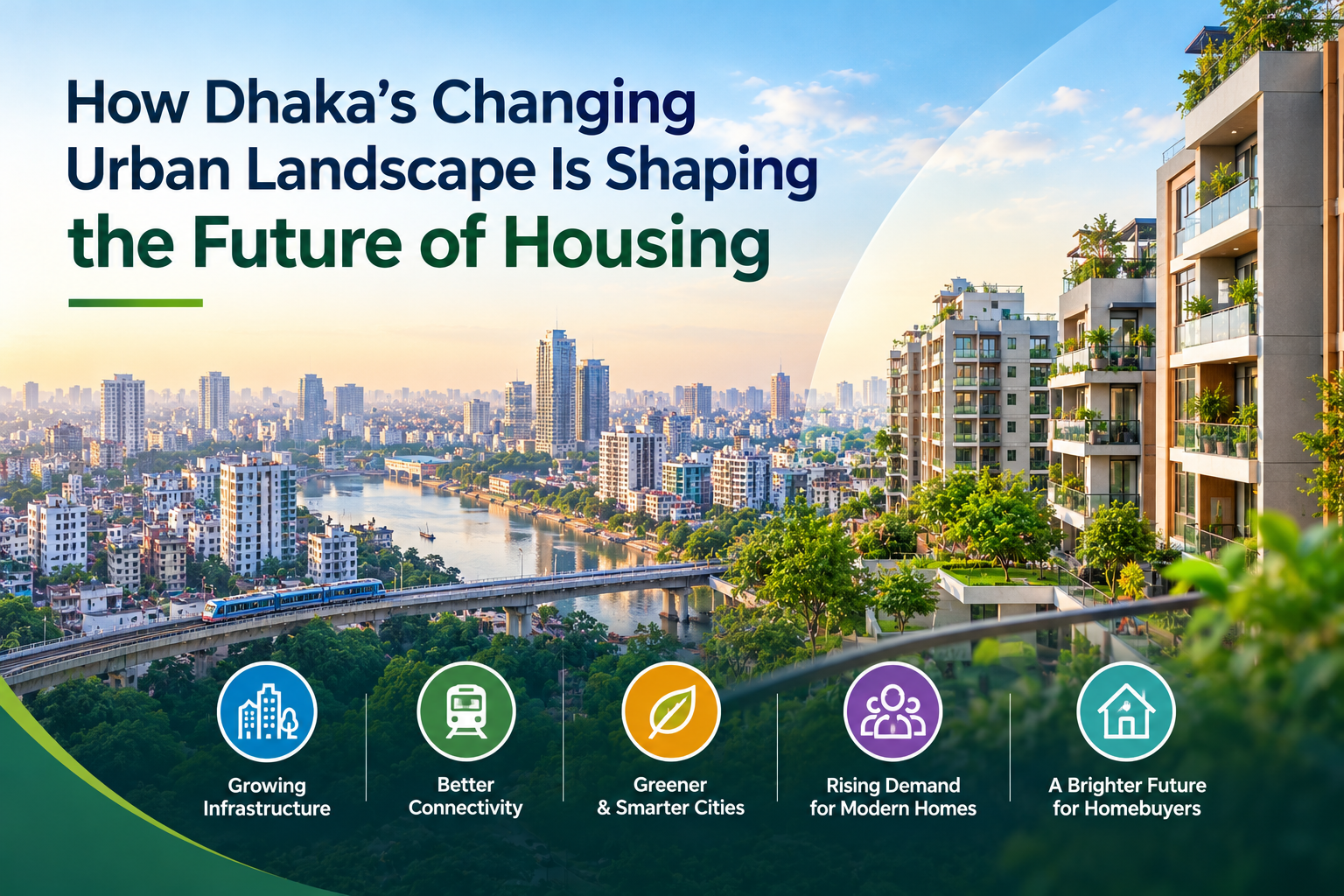
Dhaka is changing faster than almost any other city in South Asia, and its housing market is changing with it. New infrastructure, shifting buyer expectations, and an awareness of how design affects daily life are all pushing the city’s residential sector in a direction it has never gone before.
For anyone looking to buy, invest, or build in Dhaka right now, understanding where the city is heading matters just as much as understanding where it stands today. The real estate company in Bangladesh that is paying attention to this shift is the one building the homes that Dhaka’s future residents will actually want to live in.
How Rapid Urbanisation Is Reshaping Dhaka’s Housing Demand
Dhaka is growing at a pace that is difficult to fully comprehend. According to the UN’s World Urbanization Prospects 2025, as reported by The Business Standard, Dhaka has officially become the world’s second-largest city, with approximately 500,000 new residents arriving every year. That level of population pressure is reshaping what the housing market needs to deliver and how quickly it needs to deliver it.
The consequences for Dhaka’s residential market are clear:
- Demand consistently outpacing supply: Dhaka requires an estimated 120,000 new housing units annually, and the formal market delivers a fraction of that.
- Expansion beyond the core: New highways, bridges, and metro lines are opening up residential corridors outside central Dhaka that did not exist a decade ago.
- Rising buyer expectations: As more residents enter the formal housing market, expectations around design quality, construction standards, and lifestyle amenities are rising fast.
Dhaka’s urbanisation is not slowing down. The housing market that serves it will need to be significantly smarter and better planned than it has ever been before.
How Infrastructure Development is Changing The Way People Are Living
New metro lines, expressways, and planned road networks are expanding the boundaries of where quality residential living is possible in Dhaka. Areas that were once considered too far or too underdeveloped are now attracting serious buyer and developer interest.
MRT Line 6 has reduced the Uttara to Motijheel commute from around two hours to just 30–40 minutes. The Dhaka Elevated Expressway has opened up airport-adjacent corridors. The Purbachal Expressway has created an entirely new residential frontier in eastern Dhaka. And the Hatirjheel road network has made areas like Aftabnagar, Rampura, and Banasree more connected than ever.
Infrastructure is creating new centres of gravity across the city. The buyers and developers who recognise that early are the ones who benefit most from what comes next.
How Buyers’ Expectations Are Evolving in Dhaka’s Housing Market
Dhaka’s buyers are more informed, more discerning, and more specific about what they want than at any point in the city’s real estate history. Buyers are no longer just asking where an apartment is located and how much it costs. They are asking how it was designed, what it is built with, how the building will be managed, and what daily life will actually feel like inside it. Lifestyle, wellness, and long-term liveability have become as important as price and location in the decision-making process.
Developers who understand this shift are responding with better architecture, smarter layouts, more considered amenity packages, and a greater emphasis on transparency throughout the buying process. Those who do not are finding it increasingly difficult to compete in a market where buyers have more information and more options than ever before.
How Sustainable and Climate-Responsive Design Is Entering Dhaka’s Housing Market
Dhaka’s climate is not getting easier. Rising temperatures, increased flooding risk, and growing energy costs are making sustainability not just an environmental preference but a practical necessity for anyone building or buying residential property in the city.
The response from Dhaka’s residential sector is beginning to take shape. Developers are increasingly incorporating energy-efficient design, natural ventilation strategies, biophilic elements, and climate-responsive architecture into new projects. Green walls, rainwater harvesting, solar integration, and cross-ventilation design are moving from niche features to mainstream expectations among premium buyers.
This shift matters beyond environmental credentials. Sustainable apartments cost less to run, maintain better indoor comfort in Dhaka’s climate, and are increasingly preferred by the kind of buyers and tenants who drive long-term property values. The real estate companies in Bangladesh that build with climate in mind today are the ones whose projects will age the best over the next decade.
Final Thoughts
Dhaka’s urban landscape is changing on multiple fronts simultaneously. Population growth, infrastructure investment, evolving buyer expectations, and a growing awareness of climate-responsive design are all converging to push the city’s housing market in a direction it has never gone before.
The future of housing in Dhaka belongs to developers who plan, build well, and understand that the residents of tomorrow will expect more than the residents of today. The city is changing. The housing market that serves it must change with it.
FAQs
- How is urbanisation affecting Dhaka’s housing market?
Dhaka absorbs around 500,000 new residents annually, creating persistent demand for quality housing that the formal market struggles to keep pace with. This gap is driving both price growth and a push toward smarter, better-planned residential development.
- Which areas in Dhaka are benefiting most from infrastructure development?
Uttara, Bashundhara R/A, Aftabnagar, Rampura, Banasree, and the Purbachal corridor are seeing the strongest impact from current infrastructure investment, with improved connectivity driving growing buyer and developer interest in each area.
- How is the Dhaka Metro Rail changing residential demand?
MRT Line 6 has reduced the Uttara to Motijheel commute from around two hours to just 30–40 minutes, making previously peripheral areas significantly more attractive for residential living and investment.
- What do Dhaka’s buyers expect from housing today that they did not before?
Today’s buyers prioritise design quality, construction standards, natural light, ventilation, lifestyle amenities, and developer transparency alongside location and price. Functional housing alone no longer meets the expectations of Dhaka’s growing middle and upper class.
- Why is sustainable design becoming important in Dhaka’s housing market?
Rising temperatures, flooding risk, and energy costs are making climate-responsive design a practical necessity. Sustainable apartments cost less to run, maintain better indoor comfort, and are increasingly preferred by premium buyers and investors.
- How is Dhaka’s housing market expected to grow over the next decade?
With 500,000 new residents arriving annually and infrastructure expanding the city’s residential footprint, demand for quality housing across Dhaka is expected to remain strong. Areas near new infrastructure corridors are projected to see the most significant growth.
- What role do planned communities play in Dhaka’s future housing landscape?
Planned communities offer infrastructure, security, and amenity standards that unplanned developments cannot match. As Dhaka grows denser, well-managed residential communities are becoming increasingly attractive to buyers who prioritise quality of life.
- How is climate change affecting residential design in Dhaka?
Architects and developers are responding to Dhaka’s intensifying heat and humidity by incorporating cross-ventilation, shading, green walls, rainwater harvesting, and solar integration into new residential projects, making climate-responsive design a growing market differentiator.
- What infrastructure projects are having the biggest impact on Dhaka’s housing market?
MRT Line 6, the Dhaka Elevated Expressway, the Purbachal Expressway, and the Hatirjheel road network are the projects currently having the most significant impact on where people want to live and invest across the city.
- How should buyers think about location when investing in Dhaka’s evolving housing market?
Buyers should evaluate not just where a location stands today but where infrastructure investment is taking it. Areas currently underpriced relative to their connectivity trajectory often offer the strongest long-term returns for patient investors.